Smart fleets
Predictive Fleets health by driver actions data
Fleet telematics for predictive maintenance and real time observability turned into driver coaching and manufacturers insights.
Timeline
2022- 2023
My Role
Product designer
Type
Fleet Ops · B2B Predictive Platform
Responsibilities
Multi Persona Experience Design · Unified Workflows · predictive insights UX
Overview
The system is used by large car fleets managers across US and Europe to provide fleet managers with predictive maintenance reports before a breakdown occurs, alongside insights into driver behavior and pattern recognition for driving routes and fixed distribution lines.
The table‑heavy interface slowed decisions and hid patterns. We refocused the platform on health, prediction, and on‑shift actions.
Challenges
All the data was available at all time
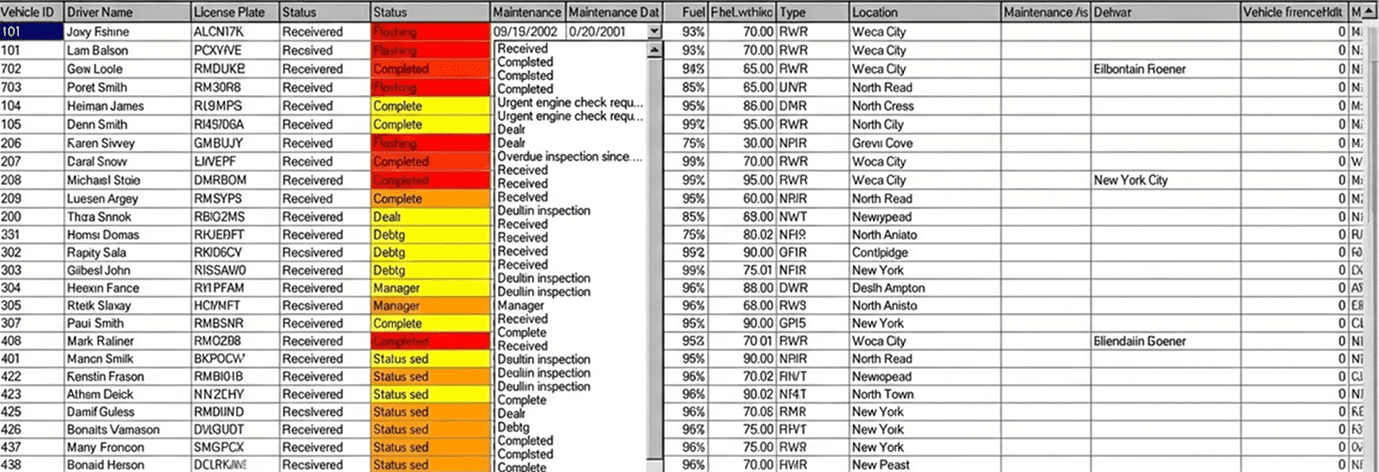
There are three operational personas that use this app - Inspectors, mechanics, and supervisors. In order to answer everyone's different level of details the system was originally designed using dense data tables which resulted in cognitive overload and low value from the presented information.
Real time visibility across operations
Fleet and field teams suffer when supervisors can’t see current status and resource availability in real time which rolls into heavy operational expenses and inefficient operations.
Multiple data sources and telematics constraints
ECU sensors for data from the engine and driver's actions, GPS and location geo fences to signal the routes and vehicle location and video from a live stream Dash Cam that present connectivity issues, hardware inconsistencies, and incomplete data streams affect the trust in the system’s output.
Complexed alert settings and operational overload
Similar to industrial maintenance platforms, fleets face alarm fatigue and data overload, where too many signals reduce actionability. This can be fixed by creating sets of rules but the alert configuration was too hard and made users frustrated with the system.
Users & Field Research
User research
Along with user interviews I went to ride with truck drivers, shadowed service inspectors daily routines.
Prepared a questionnaire for 8 active and historical users of the existing app to hear about their pains of using the app and tested early ideas with them for a brainstorm session.
Jobs to be done
After understanding who the main users are, I identified key tasks for each one of their daily / monthly routines.
The system serviced 3 personas
Data review and UX audit
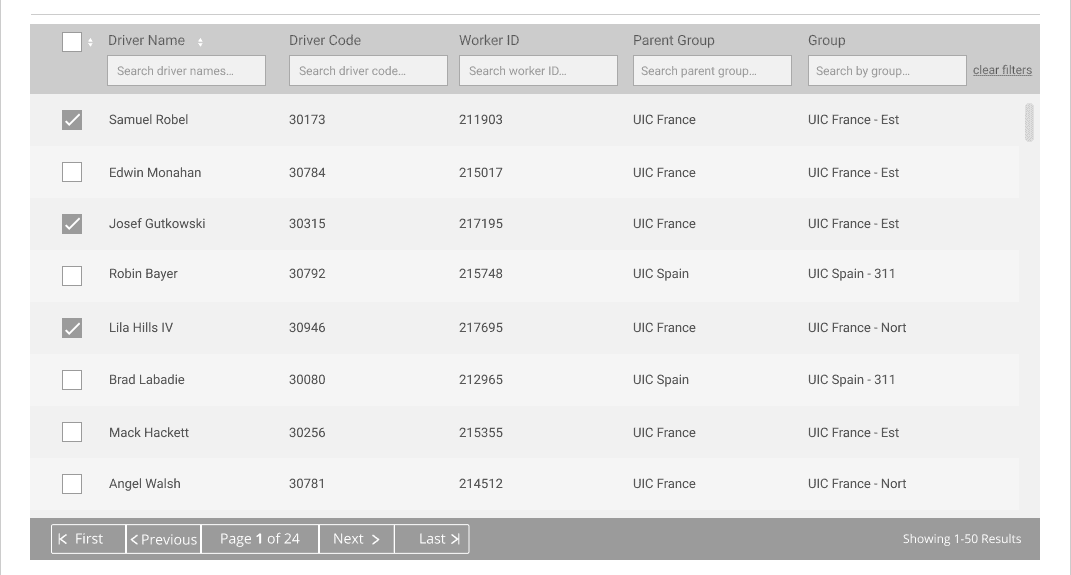
The system was originally built around extensive data tables filled with raw, unfiltered data that were overloaded and difficult to navigate.
Problem framing
Fleet managers need to quickly understand which vehicle problems require action first; Users are overwhelmed with raw telemetry and un filterable lists, making priorities unclear and hard to find the relevant data.
Maintenance work is not analytics
Teams need to quickly prioritize which vehicles require attention now, not browse long fault tables.
Reactive workflows dominate most of the cases
The fleet system relied heavily on static logs and post fault reporting, unable to schedule interventions until breakdowns occur.
Predictive insights must be trusted and explainable
Users accepted the predictions only when they understood what changed and why an action is recommended.
Maintenance work is not analytics
Teams need to quickly prioritize which vehicles require attention now, not browse long fault tables.
Maintenance work is not analytics
Teams need to quickly prioritize which vehicles require attention now, not browse long fault tables.
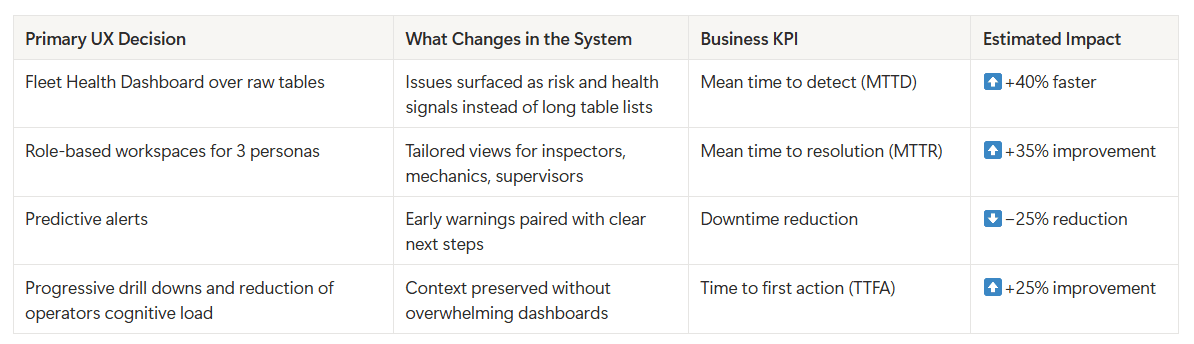
Key decisions
The Product Decisions selected to improve the experience and usability:
Success metrics
To evaluate the success of the redesign, we tied key UX decisions to measurable business and operational outcomes.
Main User Flows
I mapped the diagramed the flows that enabled the 3 main user roles to complete their tasks, so we could have a clear view of:
What data currently have that is relevant?
What data are we missing on each step?
What are the interactions they will need to do have with the data and what is a valuable outcome of those interactions?
What are next steps the user will do after getting the desired outcome?
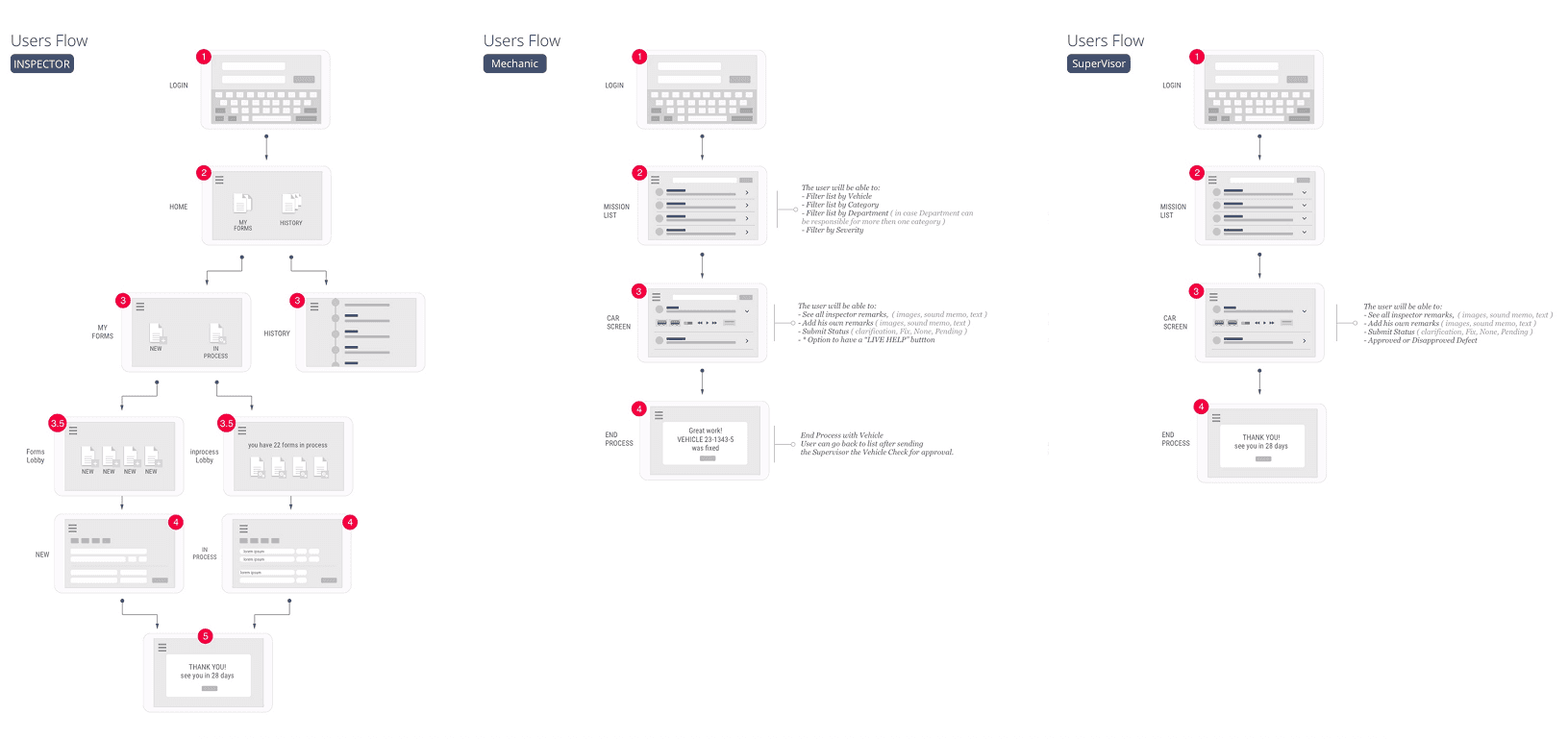
the 3 roles main flows with LO Fi screens
Wireframes
We had 3 iteration rounds using Low Fi wireframes
More and more requests came from auditors revealing significant gap in usability and required a Iterations until reaching a comprehensive GRC tool.
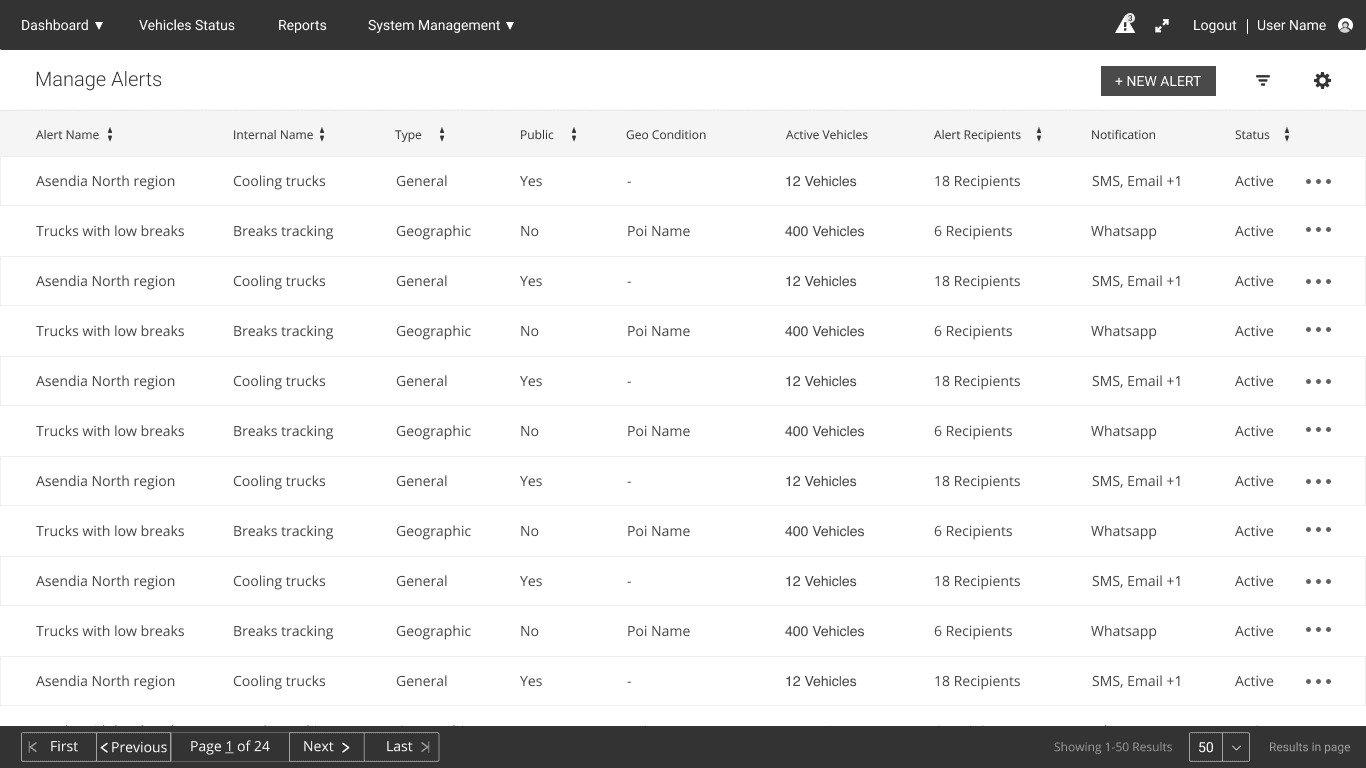
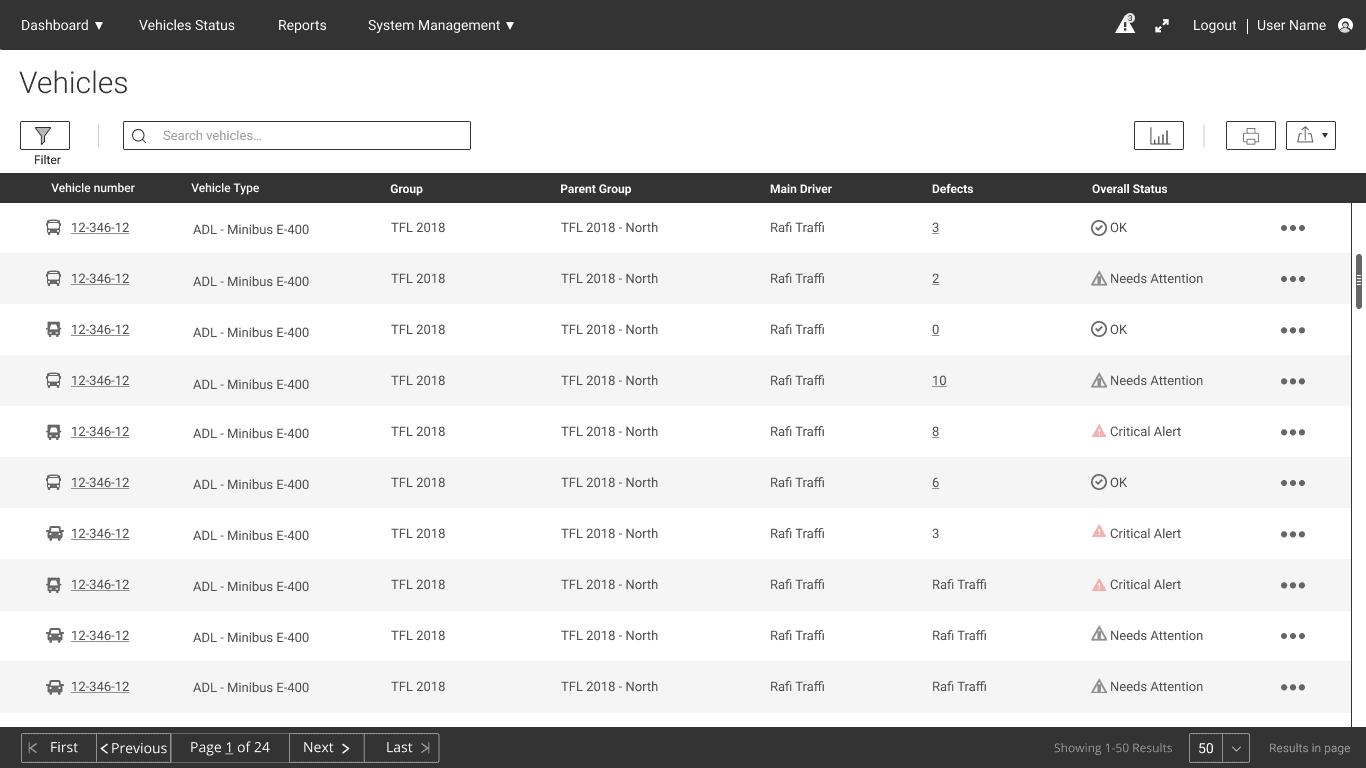
Low Fidelity Wireframes
Tradeoffs & constraints
To move forward quickly, we prioritized what mattered most: usability and consistency.
Instead of a full design system, we developed a lean (and mean 🤭) pattern library focused on work patterns and react based core UI elements.
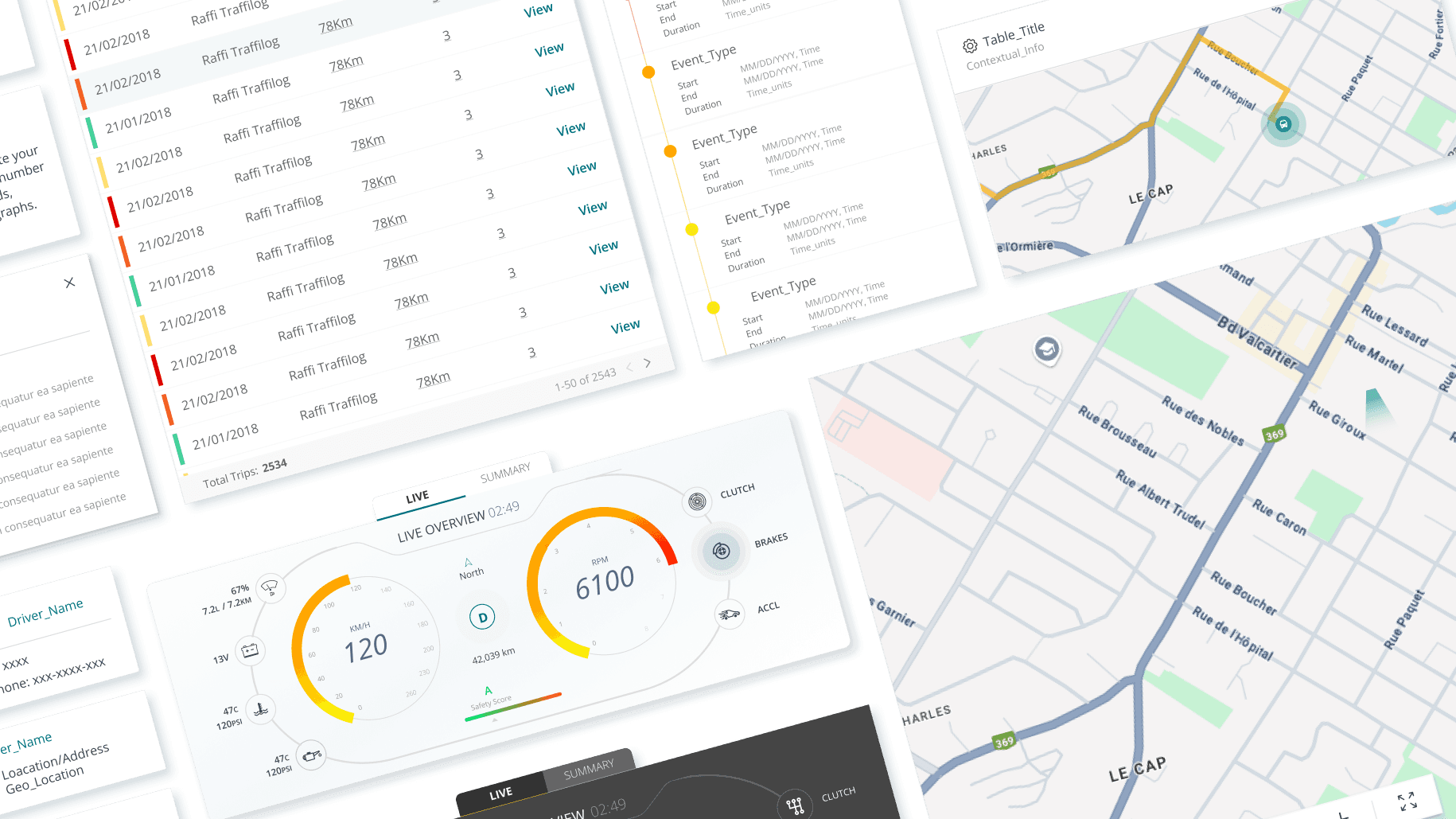
Final results
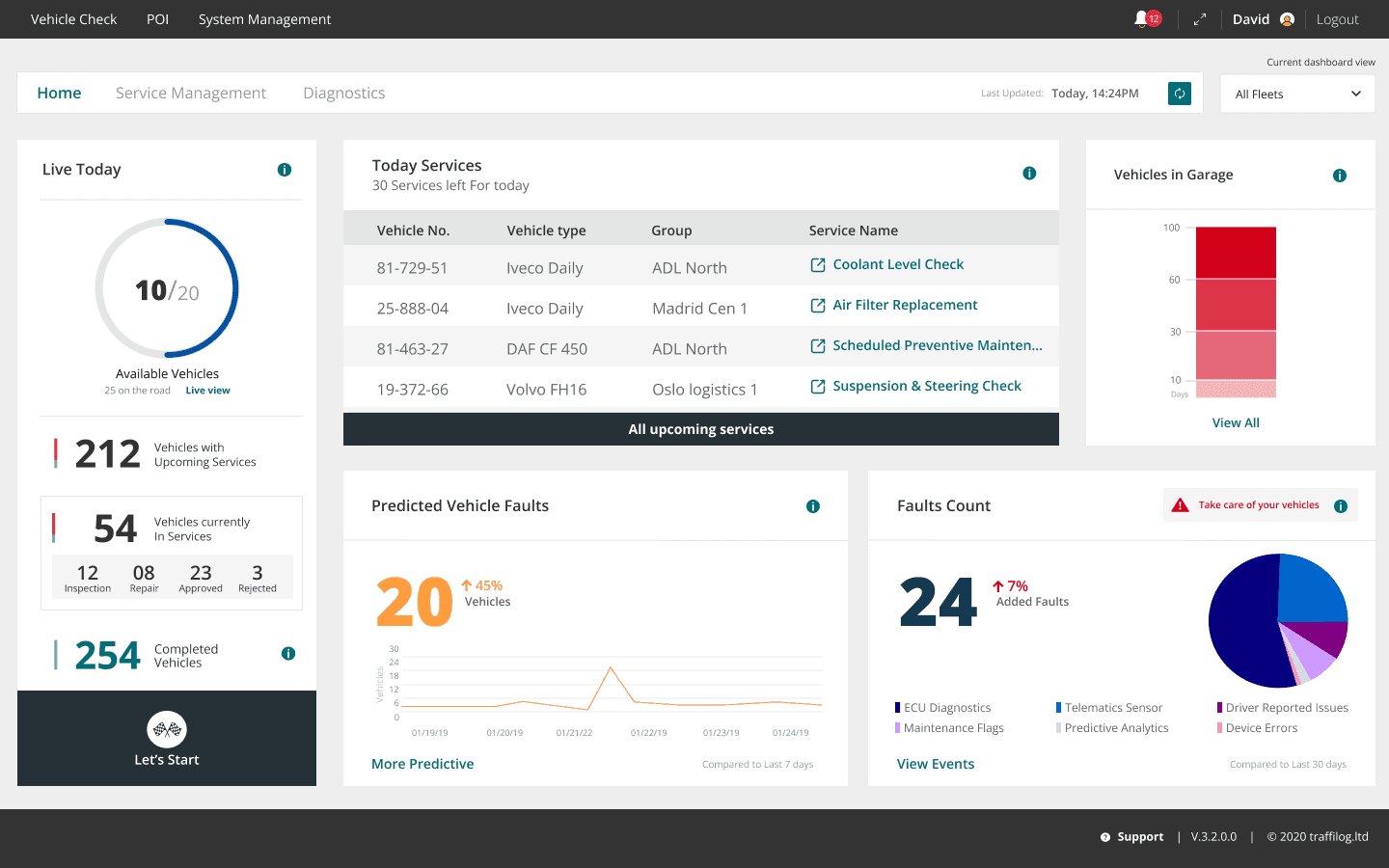
Fleet health and predictions overview
A unified operational view that replaces raw fault tables with clear fleet health signals.
Vehicles display is prioritized by risk, recurrence, and urgency allowing supervisors to immediately identify where downtime is likely to occur and allocate attention before issues escalate.
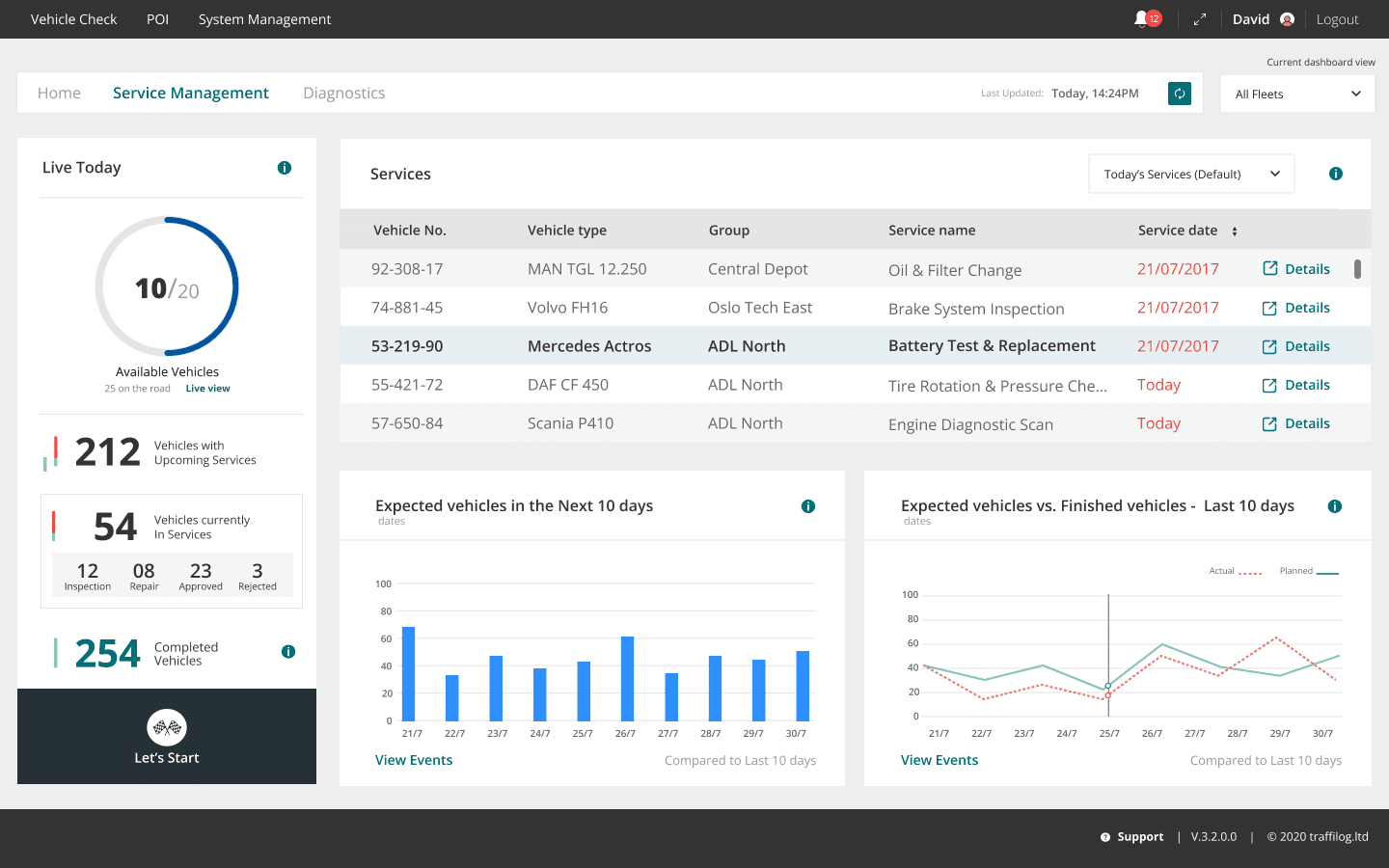
Mechanic Resolution View and Insights Layer
The system surfaces emerging risk patterns and predictive indicators.
Health degradation, abnormal behavior, and upcoming maintenance needs are framed as actionable insights.
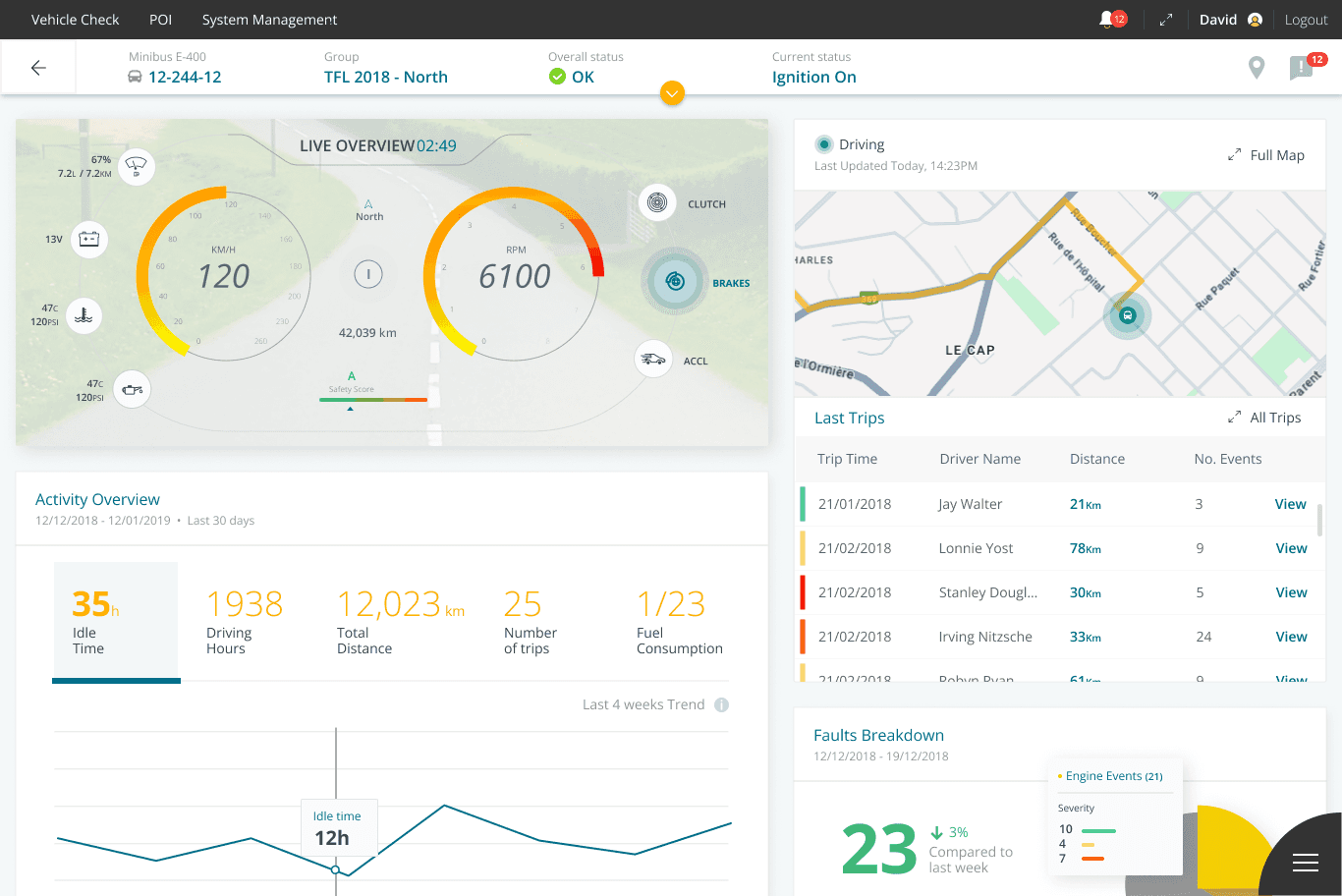
Trip and status live stream dashboard
Location, Dash cam stream, live driver behavior, and vehicle health in one screen.
Combined with a new route analytics interface and the original performance indicators, this live view empowers managers to respond instantly, prevent operational losses, and make informed, historical decisions.
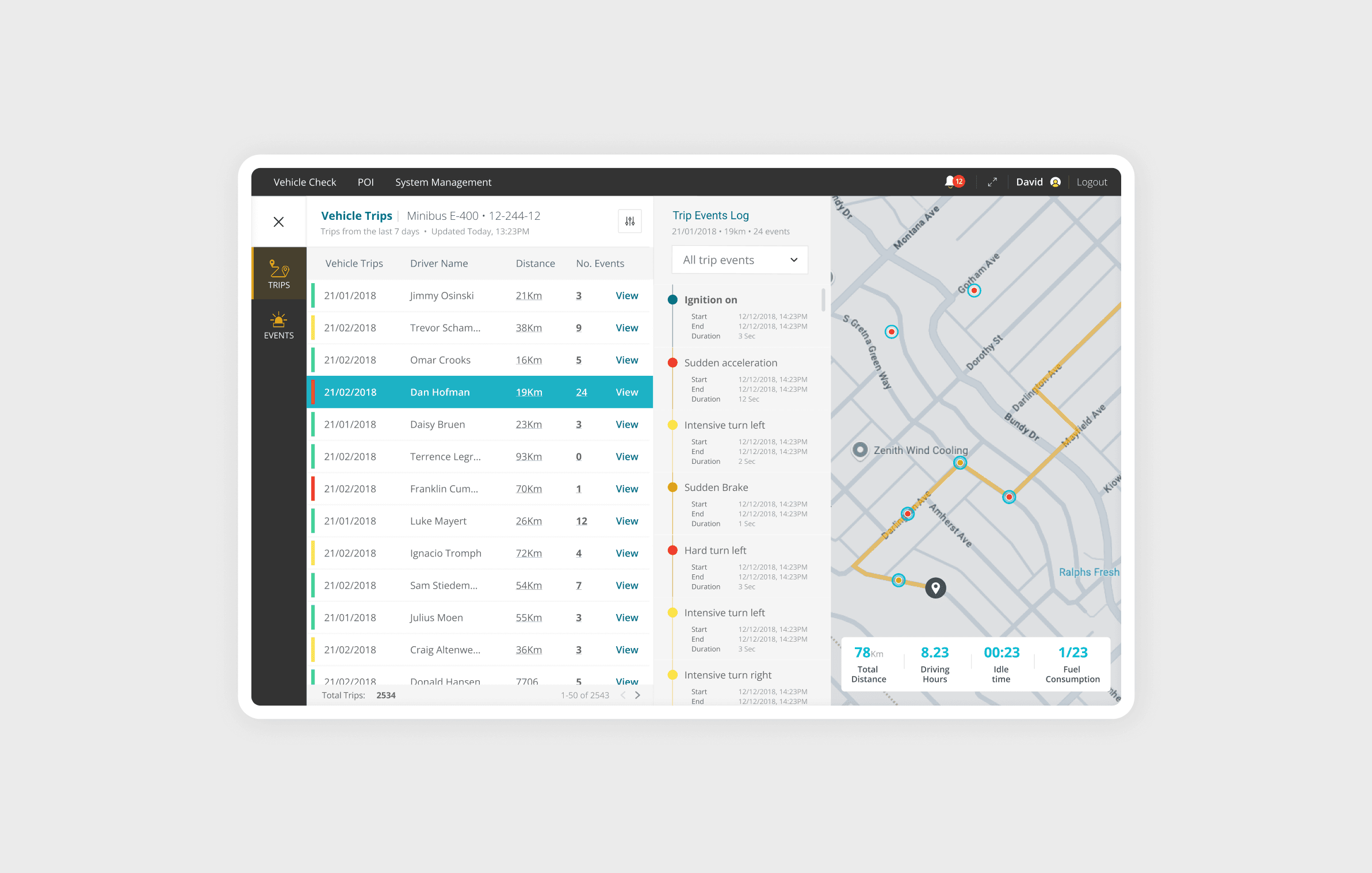
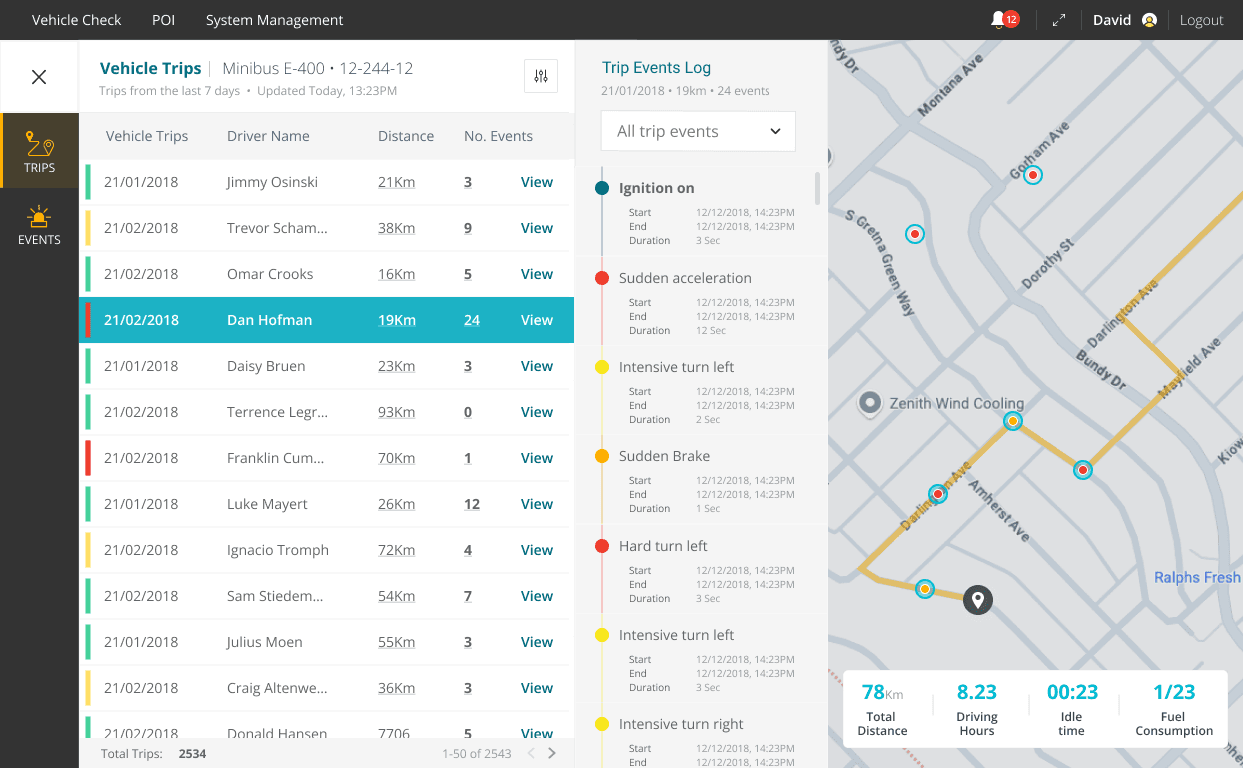
Driver behavior monitoring and automated coaching
Event timelines (e.g. harsh braking/cornering/speed) tied to routes and trips.
View trip history and driver behavioral events all while combining list views, event logs, and real-time map overlays.
Fleet managers can identify risky behaviors and tie them to specific trips, drivers, or locations
Product Impact
Quantitative measures
What I've learned
Things that helped
Designing around three interconnected personas enabled shared visibility and smoother collaborations
Shifting from tables to predictive health signals created faster SLAs and raised daily usage
Embedding recommended actions made insights being trusted
Working with challenges
Balancing telematics data with other data sources became a technological VS. experience tradeoff
Introducing predictive insights in a way that felt trustworthy even if they are generic or high level
Supporting cross-role data display without taking the ability for deep drill downs
Other Work
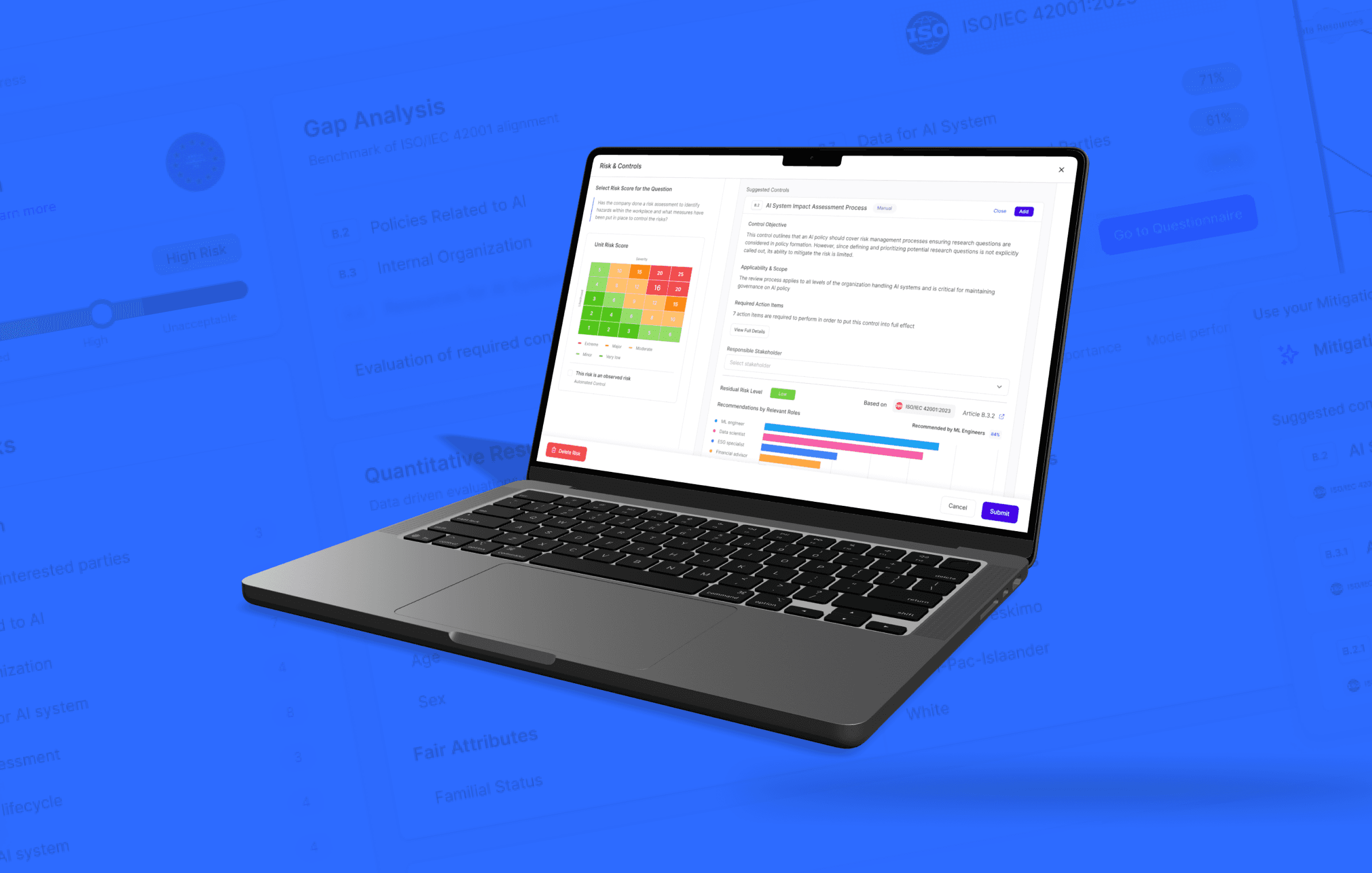
Compliance risks
co-pilot
Created an agentic audit platform transforming manual assessments into a clear risks map across teams and models
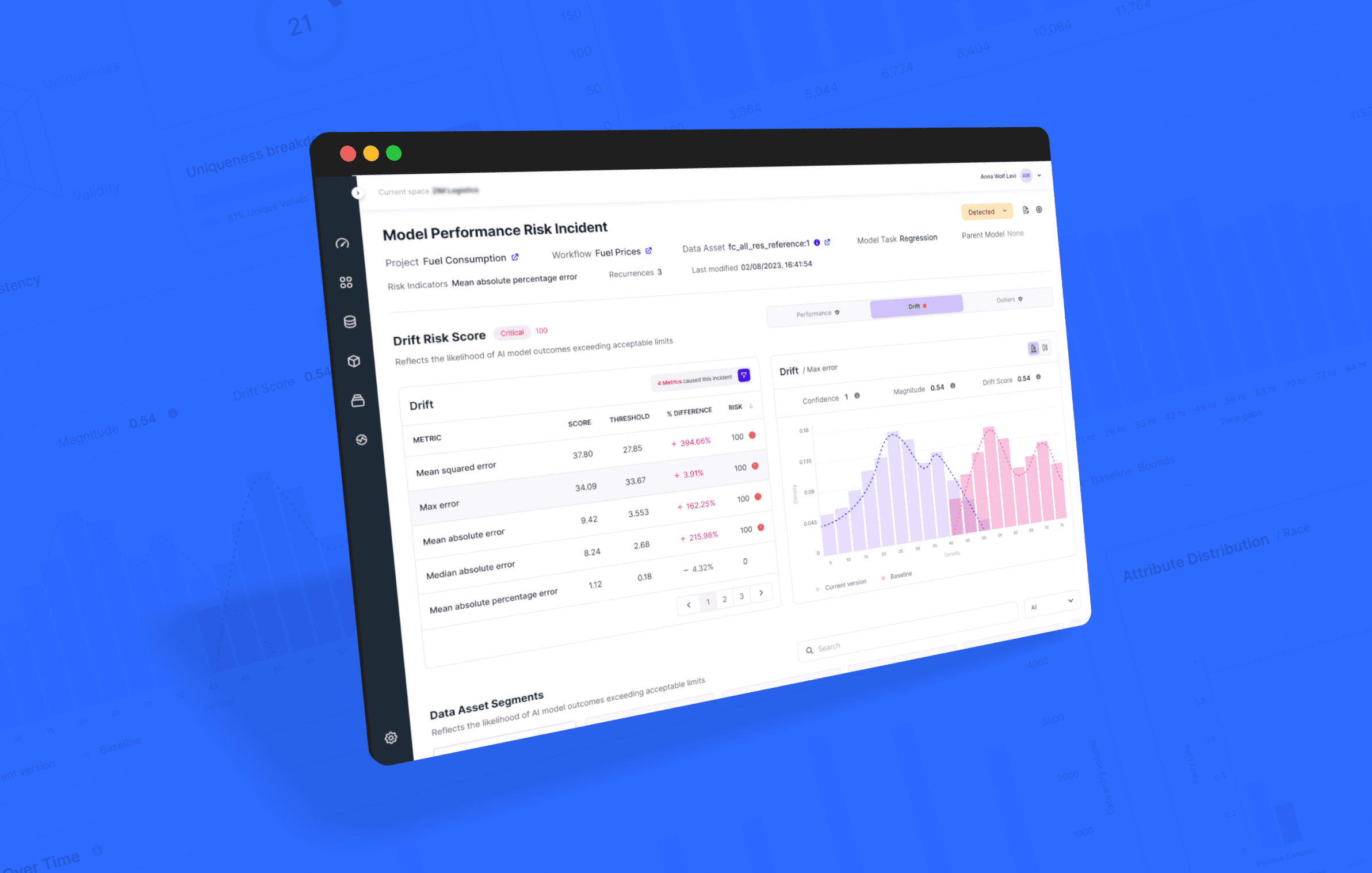
Raw data turned into exploration and business tool
Redesigned a legacy platform to map missing abilities and increase the user trust for Data science group enterprise clients